Ordering internationally? Click here for the matching Stretta Music site!

The violin can produce many tonal colours: funny, sad, majestic or seductive. Violinist Aloisia Dauer answers our questionnaire for your choice of instrument.
4/17/2025

Learning to play the violin – 20 Questions with Aloisia Dauer
(29.04.2021)

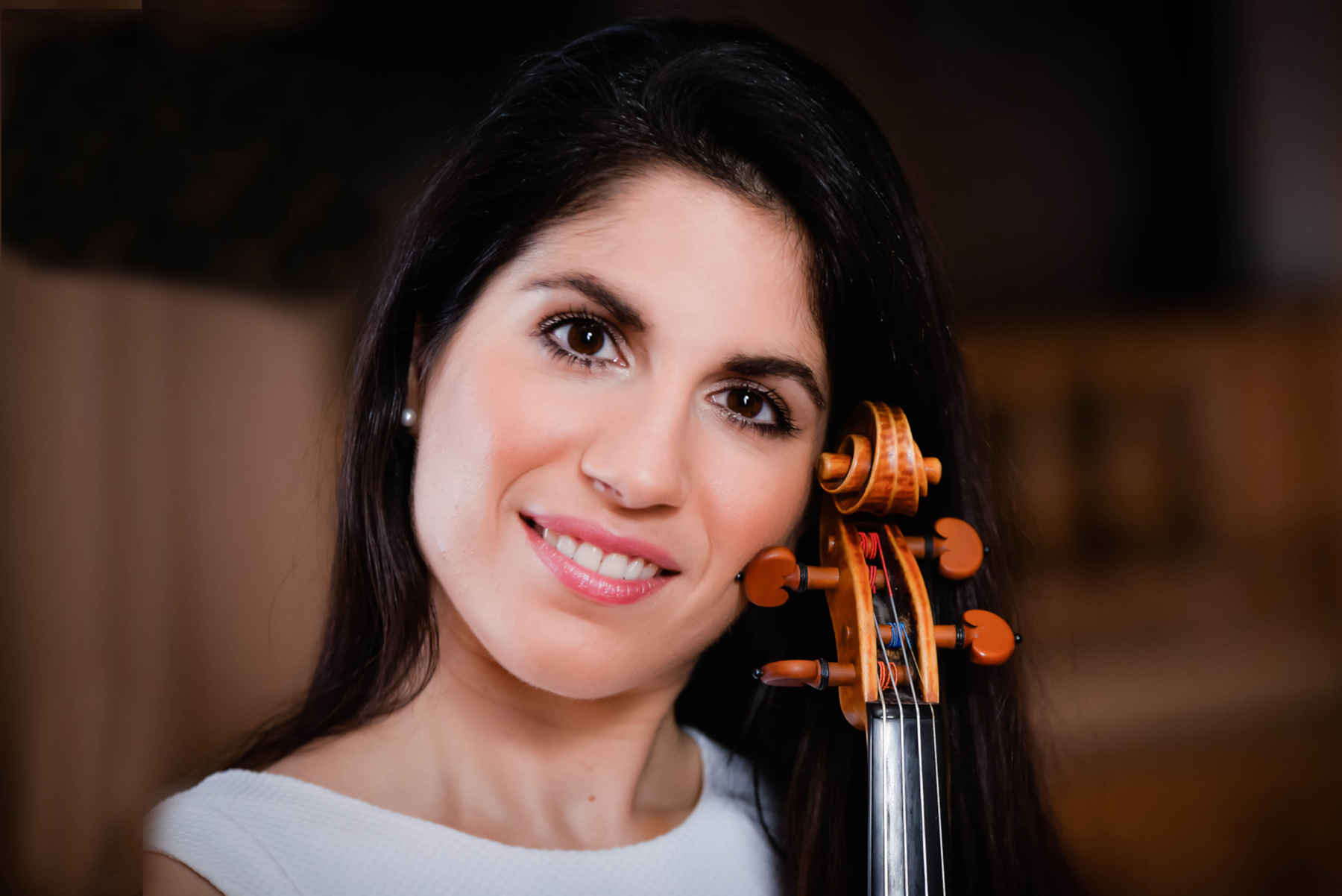
Aloisia Dauer |

Aloisia Dauer has been performing with the violin on stage since the age of seven.

She runs her own online learning platform: Your Music Mind (Instagram:
your.music.mind
). ...

REQUIREMENTS


What is the perfect starting age?

A good starting age for learning the violin is preschool or elementary school age. Since the development of violin technique takes a long time, it is advisable to start lessons as early as possible. Depending on the child, lessons can begin at age 4 or 5.

Adults can also learn to play the violin, and it is possible to start at an advanced age. When teaching adults, physical changes must be taken into account, including eyesight, hearing, muscles, joints, and motor skills. There are special violin schools for adults.


Do I need to learn to read music?

Reading music is taught step by step in beginner lessons. Some violin schools start with alternative notation forms, which are well suited for preschool age. This prepares for, but does not replace, learning to read music. To play violin literature, it is necessary to learn to read music.


Are there instruments played in a similar way?

The viola is a suitable second instrument for the violin. The posture and playing technique are very similar, and there are many examples of violinists who also play the viola regularly or occasionally. However, the viola is written in a different clef, the alto clef.


What physical prerequisites are advantageous?

The movements required for playing the violin are largely similar to those we perform in everyday life. Therefore, having a good sense of body awareness is beneficial when learning the violin. Hand size and finger length also play a certain role. The most important factor is the natural relationship with the instrument.


How do you know if you are ready for the instrument?

A love for the instrument, general musicality, and a fascination with the violin sound are good prerequisites. A good ear is important for the violin, which can be prepared in kindergarten and preschool through early musical education and singing. Rhythmic sense is also developed through early education and singing. Learning the violin requires patience and good body awareness to master the posture and movements.


FINANCES


How much does the instrument cost?

Children should start with a “small” instrument that suits their size. These instruments typically start with the 1/8 violin and go up to the 3/4 violin. Good beginner instruments rented from a violin maker usually cost between €15 and €30 per month.

To buy, small violins start at around €300. Additionally, a bow and a violin case need to be purchased. Since children grow at different rates, it is difficult to determine how long a student will use a particular size of violin. Rental instruments are therefore recommended for children. For a full-size student violin, one should invest at least €1,000 to get a good instrument.

There is virtually no upper limit for violin prices, so it is advisable to set a budget before searching for an instrument. If the instrument is well-maintained and regularly checked by a violin maker and teacher, and no repairs are needed due to damage, the violin will not depreciate but can even increase in value, making it a good investment.



Are there any additional costs?

The bow hair needs to be regularly replaced (approximately €50 – €100 at the violin maker, depending on the location) and the violin strings need to be changed (4 strings for students cost around €30 – €60), at least once a year for students. The instrument should also be checked and cleaned by a violin maker once a year.

Additional costs include care products like a microfiber cloth and string cleaner, as well as essential accessories such as a mute, rosin for the bow, and peg soap. Violinists also need the indispensable items for all musicians: a music stand, a metronome, and a tuner.


How intensive is the maintenance?

The violin needs to be handled carefully and cleaned of rosin regularly to prevent damage to the varnish. The wood is sensitive to extreme temperature fluctuations, so it is important not to leave the instrument in places like a car, in the sun, or in the cold to avoid cracks.

Strings can break due to wear and should be replaced regularly for good sound quality, just like the bow hair should be changed by a violin maker. It is important that the violin is not bumped or placed on the strings and bridge.


How should the instrument be transported?

The violin should be stored and transported in its case.


PRACTICE MAKES PERFECT


Can you teach yourself the instrument?

The posture and movements involved in playing the violin should be shown by a professional teacher. Especially at the beginning, there are many aspects of posture and movement to be learned correctly. It is difficult to play without regular supervision. Even experienced violinists have teachers or coaches to address issues. The risk of injury or pain is higher when practicing alone. Violin teaching content can be supplemented with online courses.


Can I play multiple instruments at once?

If the posture and technique of playing the instruments are very different, it is not recommended to play both at once. Some professionals do play both instruments at a high level. However, for children, it is advisable to learn one instrument and not a second until later.


How often and how long should I practice?

Practicing every day is ideal. For younger children, 10 – 20 minutes daily is sufficient. For older children and adults, practice duration should increase gradually as the body gets used to it. Regular practice for 1 – 2 hours daily is recommended for adults.


How long does it take to become proficient?

The ability to play violin music beautifully depends on individual talent, the quality of lessons, and regular practice. Generally, it takes about a year for children and six months for adults to play their first simple pieces.


When will I be able to play my favorite pieces?

Playing favorite pieces depends on their difficulty and the student's practice habits. If the pieces are simple, like folk songs, they can be learned relatively quickly. For more complex pieces, it takes several years of practice. The technical level and musical expression required for a piece play a significant role.


Can I sing while playing the instrument?

Playing the violin and singing simultaneously requires a high degree of coordination. It is generally more challenging than playing and singing with instruments like the piano or guitar.


Can the instrument be combined with others?

The violin can be combined well with other string instruments, the piano, and some wind instruments. In orchestral and chamber music, it is common to play with various other instruments. The violin is also well-suited for playing with electronic instruments in contemporary music.


How versatile is the instrument?

The violin is versatile and used in classical music, folk music, jazz, rock, and pop. Many violinists experiment with different styles and genres. It is possible to expand the repertoire significantly by exploring various music styles.

More about the topic